Free software for Windows
The window is the content.
These apps have no toolbars, no menus, no settings and no network of their own. Each one is a window onto one kind of content, framed by the single pixel Windows draws. The first is a PDF viewer.
Minimal PDF 1.0.0 · first release in testing · Windows 10 and 11 · free, MIT
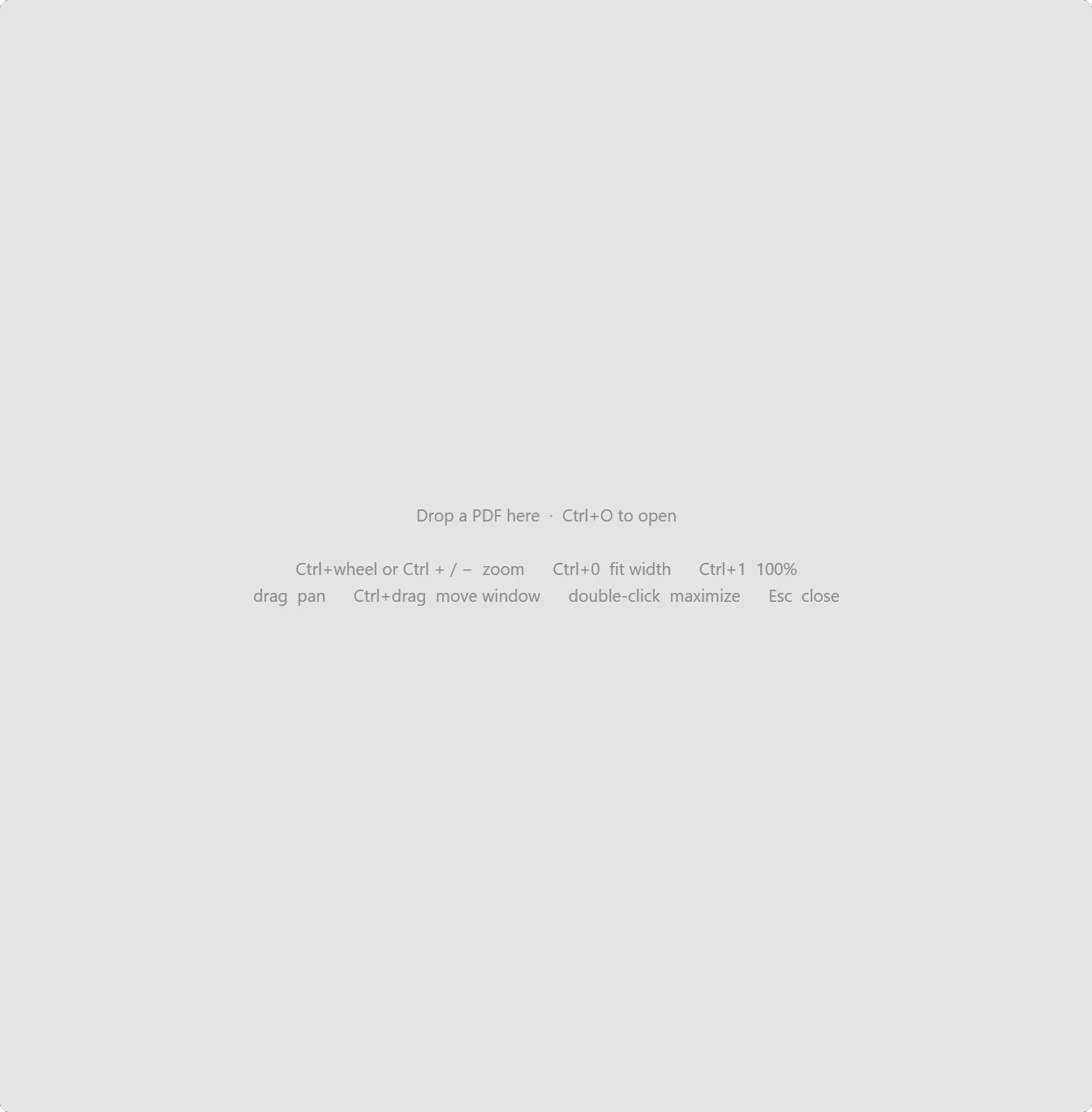
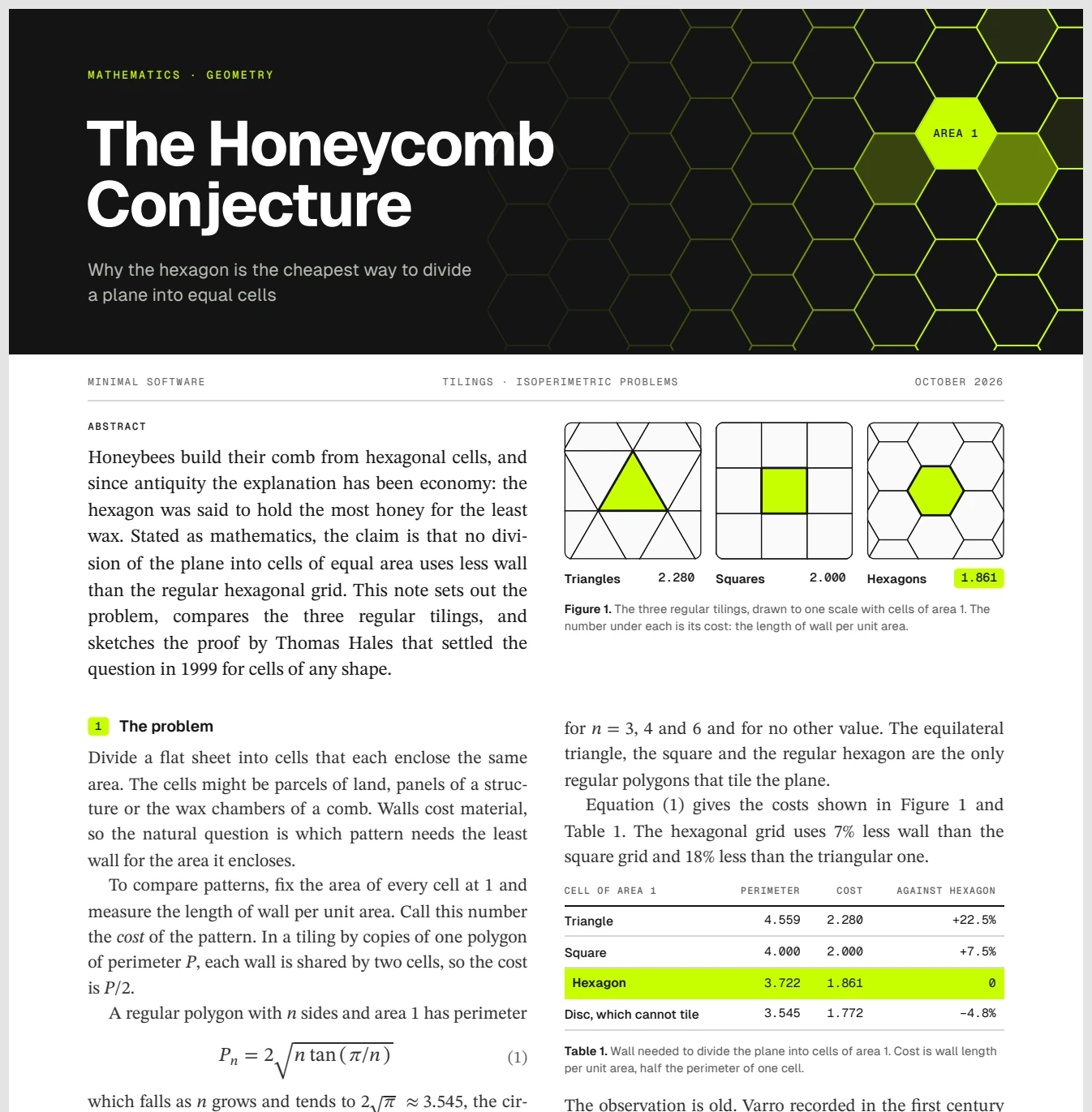
The window is a real capture of Minimal PDF at 150 % display scaling. The paper in it is rendered from the PDF at the same size. You can drag the file onto the window yourself.
One window onto one kind of content.
This isn't a suite. There's no launcher, no account and no shared settings. Each app installs, runs and uninstalls on its own, and all they share is how they behave.
Minimal PDF
The PDF viewer that is just the PDF. Continuous pages, zoom around the pointer, sharp at any scale. One small program, no network.
Product pageMinimal AI
One window onto the web assistants you already use: a single row of tabs with plain names, logins that persist, and no network calls of the app's own.
Product page with the first buildSeven rules, applied to every app.
They're numbered because every app is checked against all seven before it ships, and every feature request is answered with the number it would break. Read them in full.
Zero chrome
No caption, toolbar, menu bar, status bar, sidebar or scrollbars. The window edge is the content edge.
Native frame only
Windows draws the one-pixel border, rounded corners and shadow, so the window still snaps, stacks and resizes like any other.
Every action is a gesture or a key
Zoom, scroll, page, open, move, maximize and close all work from the mouse or the keyboard. There isn't a button anywhere.
Feedback is transient
A page or zoom badge and a hairline scroll mark appear while something changes, then fade in about a second.
No configuration
No settings, no preferences file, no registry keys. It opens, shows and closes.
No dependencies, no network of its own
The engine already inside Windows does the work. The app never connects to anything.
Crisp by construction
Content is drawn at the exact device-pixel size it fills, at your monitor's real scale, so text is never blurry.
Made with what is already in Windows
Nothing bundled, nothing to trust twice.
Windows has shipped a PDF engine since 8.1, along with image codecs, a media pipeline and a browser engine. A Minimal app asks the engine you already have to draw the content at the exact pixel size it fills on your screen, then shows the result. There's no third-party renderer inside the app and no parser of its own to patch. The one it uses is patched by Windows Update, like the rest of your system.
- PDF engine
- Windows.Data.Pdf, part of Windows since 8.1
- Other code
- Only Microsoft's own Windows bridge libraries, bundled inside the one file
- Writes to disk
- Nothing. Version 1.0 only reads your files
- Runs as
- A normal user. It never asks for administrator rights
- Licence
- MIT. The source goes public with the first public release
Minimal Software is made by Federico Etinger in New York and Bucharest, with Claude and Grok as the development team. The build log shows who decided what.
How it was built